

Storm & hail damage repair that reads the mechanism, not just the visible marks
Wind lift and hail impact damage a roof differently, and each leaves distinct signs we know how to identify.
Email Us for a Free EstimateWhy homeowners choose us
Free estimates · No obligation
How storms actually damage Toronto roofs
Severe weather off Lake Ontario and seasonal storm systems affect roofs through several distinct mechanisms, and an accurate repair depends on identifying which one occurred.
Wind lift and shingle seal failure
High winds can break the adhesive seal between shingle courses without necessarily tearing the shingle itself, leaving it vulnerable to further lifting and water intrusion in subsequent weather even though it may look intact from the ground.
Hail bruising versus visible cracking
Hail impact can bruise a shingle's mat and compress its granules without an obvious crack, an early-stage form of damage that's easy to miss without close inspection but that shortens the shingle's remaining service life.
Flashing and vent cap displacement
Wind can shift flashing or vent caps out of position without dislodging them entirely, creating a gap that admits water only under specific wind-driven rain conditions.
Debris impact from nearby trees
Mature tree canopy common in many Toronto neighbourhoods means storm-driven branch debris is a frequent, localized cause of impact damage distinct from hail or wind alone.
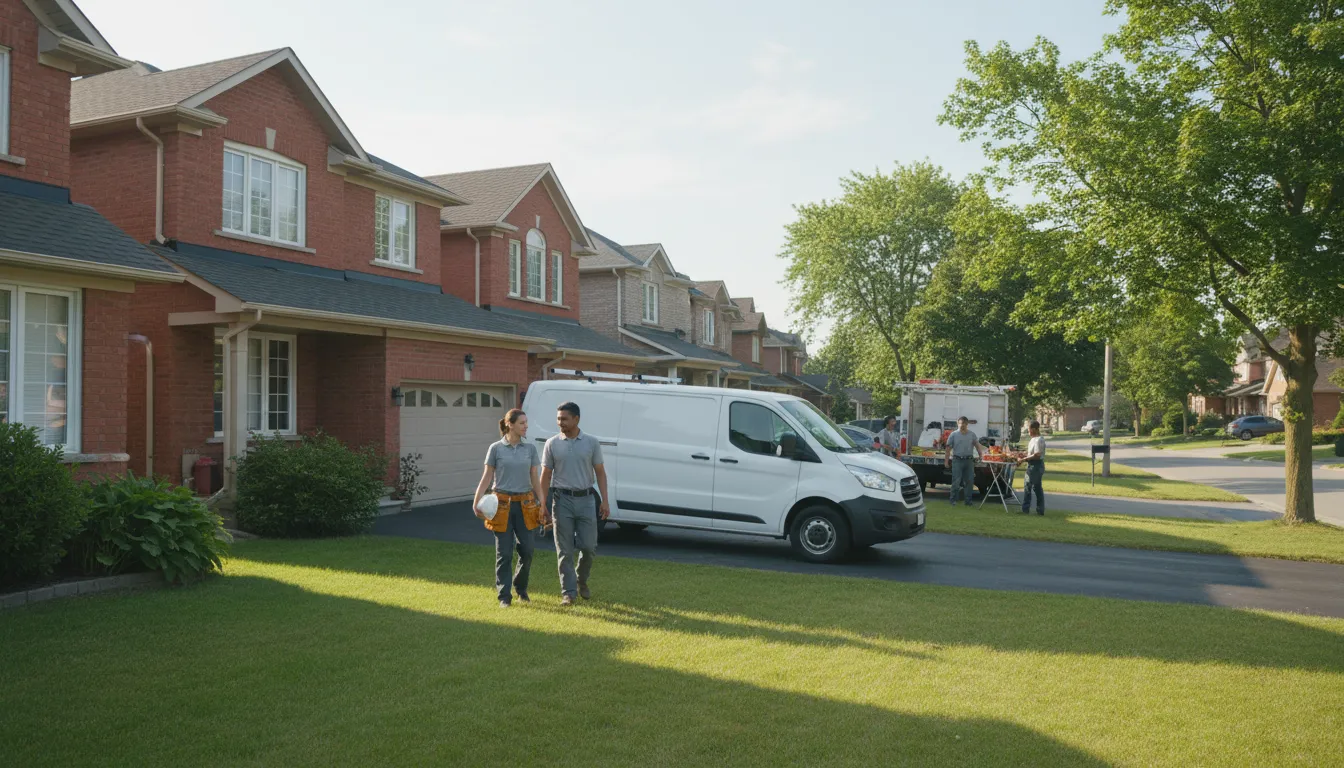
Storm damage isn't always visible from ground level
Wind-lifted seals and hail bruising often don't produce an obvious sign visible from the driveway, which means storm damage can go unaddressed until a subsequent weather event turns a subtle weakness into an active leak.
We assess for the specific mechanisms storms cause
Following a storm, we inspect for seal failure, granule displacement, flashing movement, and impact bruising specifically, not just obvious tears. Findings are documented with photographs in a format suited to insurance claims where applicable, and we explain what we found in plain terms.
How a post-storm assessment proceeds
A prompt, methodical process suited to time-sensitive storm damage.
- 1
Request an assessment by email
Send your address and the approximate date of the storm event.
- 2
On-site damage assessment
We inspect for wind lift, hail bruising, flashing displacement, and debris impact.
- 3
Documented findings
You receive a photo-backed report describing the damage found, suited to insurance documentation where relevant.
- 4
Written repair scope and quote
We provide a proposed repair scope and cost based on the documented damage.
- 5
Repair and verification
Once approved, we complete the repair and confirm the affected area is properly sealed.
Why our storm assessments hold up
Storm damage is often subtle, and we assess for the specific mechanisms involved.
Mechanism-specific inspection
We check for wind lift, hail bruising, and flashing displacement individually, not just visible tears.
Photo-documented findings
Every assessment includes photographic evidence suited to insurance claim documentation.
Prompt post-storm response
We prioritize scheduling assessments soon after severe weather events.
Debris and impact awareness
We account for tree canopy debris common in many Toronto neighbourhoods, distinct from hail damage.
Clear written scope
You receive a documented repair scope before work begins.
Licensed and insured
All work is carried out by licensed, insured personnel.
Storm and hail damage questions
Can hail damage a roof without cracking the shingles?
Yes, hail can bruise a shingle's mat and compress granules without visible cracking, a subtler form of damage that shortens the shingle's remaining service life even though it isn't obvious from the ground.
How soon after a storm should I have my roof checked?
As soon as reasonably possible, since wind-lifted seals and displaced flashing can allow water intrusion in the next rain event even if no damage is visible yet.
Can you provide documentation for an insurance claim?
Yes, we document findings with photographs in a format suited to supporting an insurance claim, though the claim decision itself rests with your insurer.
Is debris damage from trees treated differently than storm wind damage?
We assess it separately, since impact damage from fallen branches is typically localized, while wind lift can affect broader areas of the roof.
How do I request a post-storm assessment?
Email us your address and the approximate date of the storm, and we'll arrange an inspection.
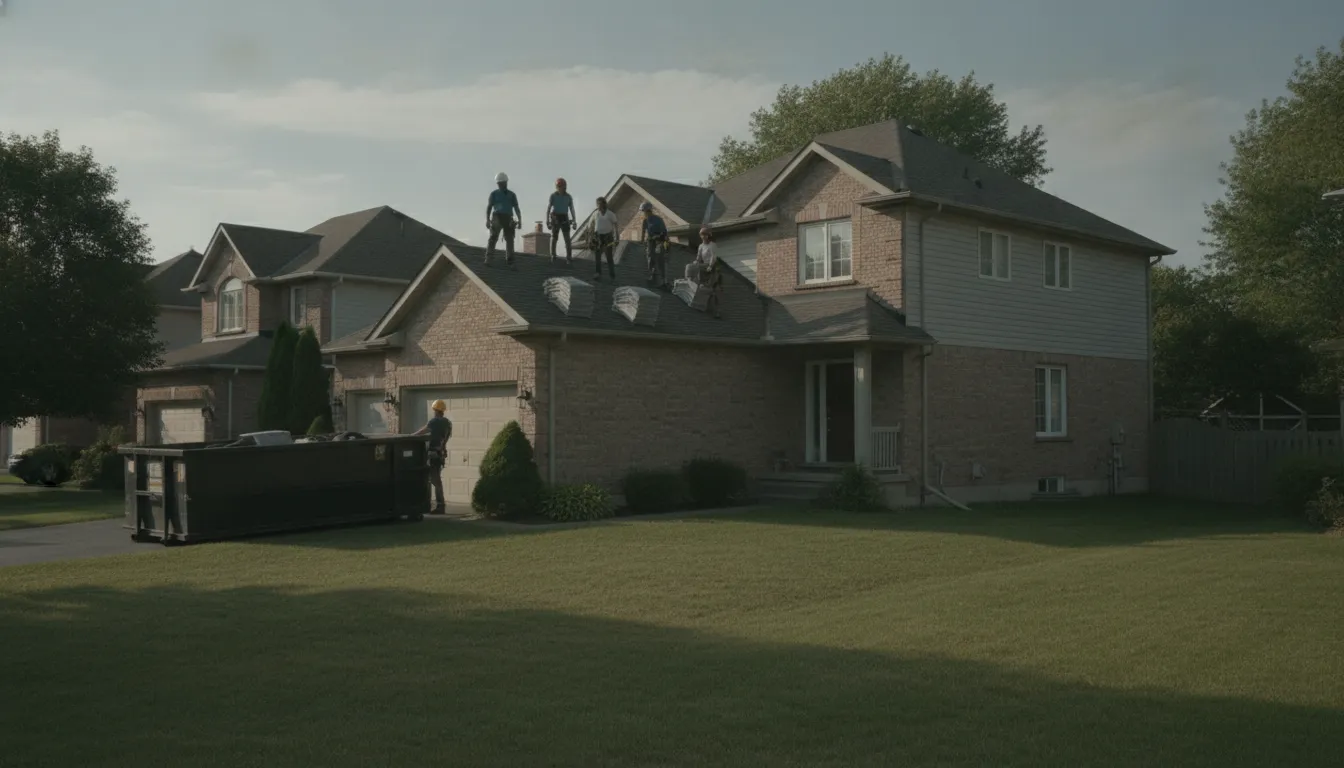
Get your roof assessed after severe weather
Email us to request a free quote and documented inspection.
Email Us for a Free EstimateWeather is hard on your roof — email us for a same-day inspection.
Fall roofing conditions in Toronto, ON
Fall is the critical prep window around Toronto, ON: clear gutters, reseal flashing, and fix loose shingles before freeze-thaw and snow load arrive.
Proudly Serving Toronto, ON
Local, on-time service throughout Toronto and the surrounding area.