

Flat & commercial roofing in Toronto, assessed the way the membrane actually fails
Low-slope roofs depend on seam integrity and drainage more than any single material layer. We evaluate both before recommending a repair or replacement.
Email Us for a Free EstimateWhy homeowners choose us
Free estimates · No obligation
Flat roofing in a city built on ponding risk
Low-slope commercial and multi-unit roofs across Toronto rely on drainage that was designed decades ago for rainfall patterns that have since intensified. We assess the roof as a drainage system first, and a membrane second.
Ponding water accelerates seam failure
Standing water on a flat roof adds sustained hydrostatic pressure to seams and penetrations, and in Toronto's freeze-thaw climate that ponded water also expands as ice, working seams loose faster than on a well-drained roof.
Membrane type dictates repair method
TPO, EPDM, and modified bitumen each require different seam preparation and repair materials. Applying the wrong repair method to a membrane type is one of the more common causes of recurring flat roof leaks we're called to fix.
Rooftop equipment penetrations
HVAC curbs, vent stacks, and drain penetrations are common failure points on commercial roofs, particularly where flashing has been disturbed by unrelated mechanical service work.
Parapet and coping details
Water intrusion at parapet walls and coping caps is frequently misdiagnosed as a membrane failure, when the actual entry point is a coping seam or counter-flashing detail above the membrane line.
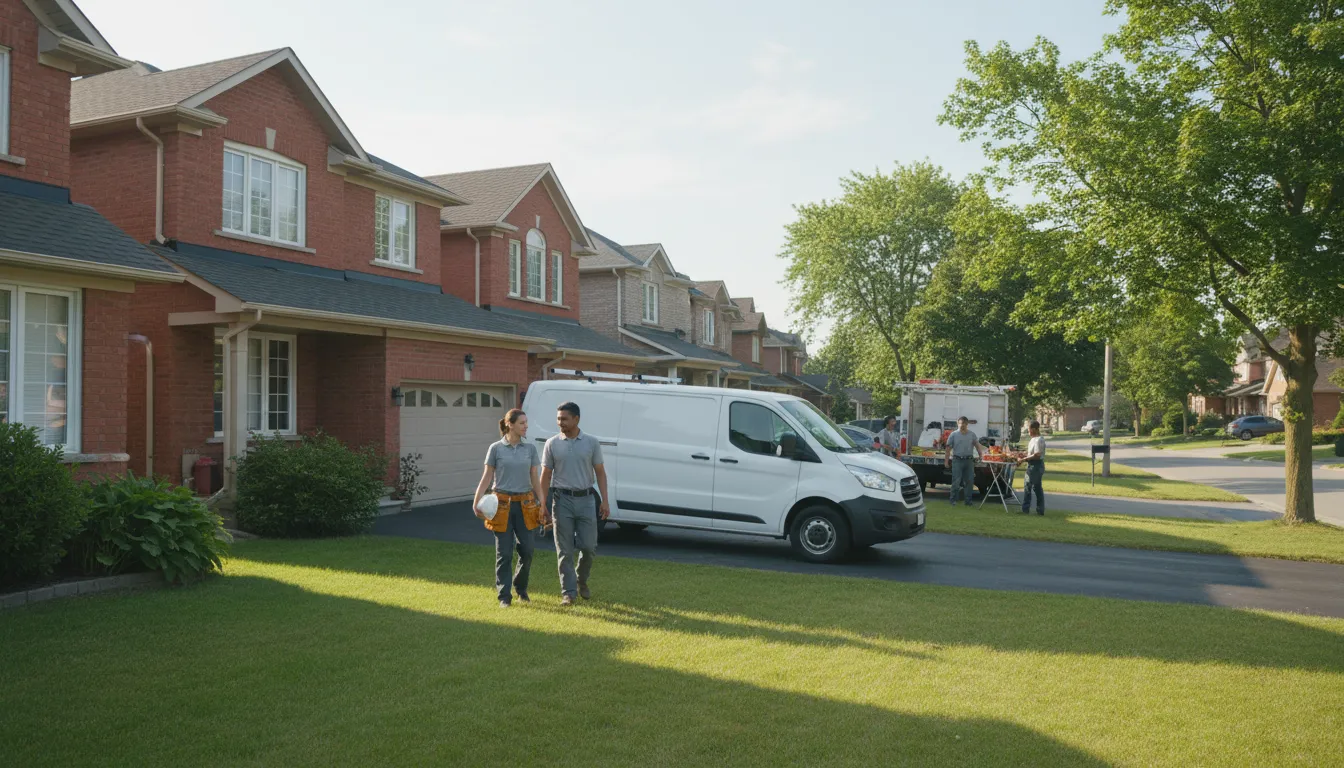
A single membrane patch rarely resolves a recurring flat roof leak
Flat roofs often get a quick patch at the point of an interior leak, without an assessment of why water reached that seam in the first place. If drainage slope, ponding, or a nearby penetration caused the failure, the same seam or an adjacent one typically fails again within a season or two.
We assess drainage and seam condition together before repairing
Our approach maps the roof's drainage pattern, identifies ponding areas, and inspects all seams and penetrations in the vicinity of the reported leak. The repair addresses the actual cause, whether that's a seam, a drain, or a slope issue, and we document the assessment so building owners and property managers have a clear record.
How we assess and repair flat and commercial roofs
A methodical sequence suited to low-slope assemblies and their access requirements.
- 1
Request a quote by email
Send us the property address, roof access details, and a description of the issue.
- 2
Drainage and membrane inspection
We map slope, ponding areas, seams, and penetrations across the full roof surface.
- 3
Written findings and scope
You receive documented findings and a proposed repair or replacement scope, with cost.
- 4
Scheduled repair or replacement
Work is scheduled with consideration for building occupancy and weather suitable for membrane work.
- 5
Post-repair verification
We confirm the repaired area sheds water correctly and review the work with you or your property manager.
Why building owners choose us for low-slope roofing
Flat roofs fail differently than pitched roofs, and we assess them on those terms.
Drainage-first assessment
We map slope and ponding before proposing any repair, since drainage issues cause a large share of recurring flat roof leaks.
Membrane-specific methods
Repair techniques are matched to TPO, EPDM, or modified bitumen rather than applied generically.
Minimal disruption scheduling
We coordinate access and timing around building occupancy where possible.
Documented condition reports
Property managers receive photo-backed findings suitable for capital planning records.
Licensed and insured
All work is carried out by licensed, insured personnel.
Penetration-aware repairs
We inspect HVAC curbs, vents, and drains near any reported leak, since disturbed flashing at these points is a frequent cause.
Flat and commercial roofing questions
How long does a properly maintained flat roof membrane last in Toronto?
Service life varies by membrane type and maintenance, but Toronto's freeze-thaw cycling and ponding risk mean seam inspections should happen more frequently than in a milder, drier climate.
Is ponding water always a problem on a flat roof?
Brief ponding after rainfall is common on low-slope roofs, but water that stands for more than 48 hours indicates a drainage issue that should be assessed, since it accelerates seam and membrane degradation.
Do you work on multi-unit residential flat roofs as well as commercial buildings?
Yes, we assess and repair flat roofs on multi-unit residential buildings, mixed-use properties, and standalone commercial buildings across Toronto and the GTA.
Can a flat roof be repaired instead of replaced?
Often yes, provided the underlying deck and insulation are sound and the damage is localized to seams or penetrations. We'll tell you plainly if replacement is the more defensible option.
How do I request a quote for a commercial property?
Email us the property address, access information, and a description of the concern, and we'll arrange an inspection.
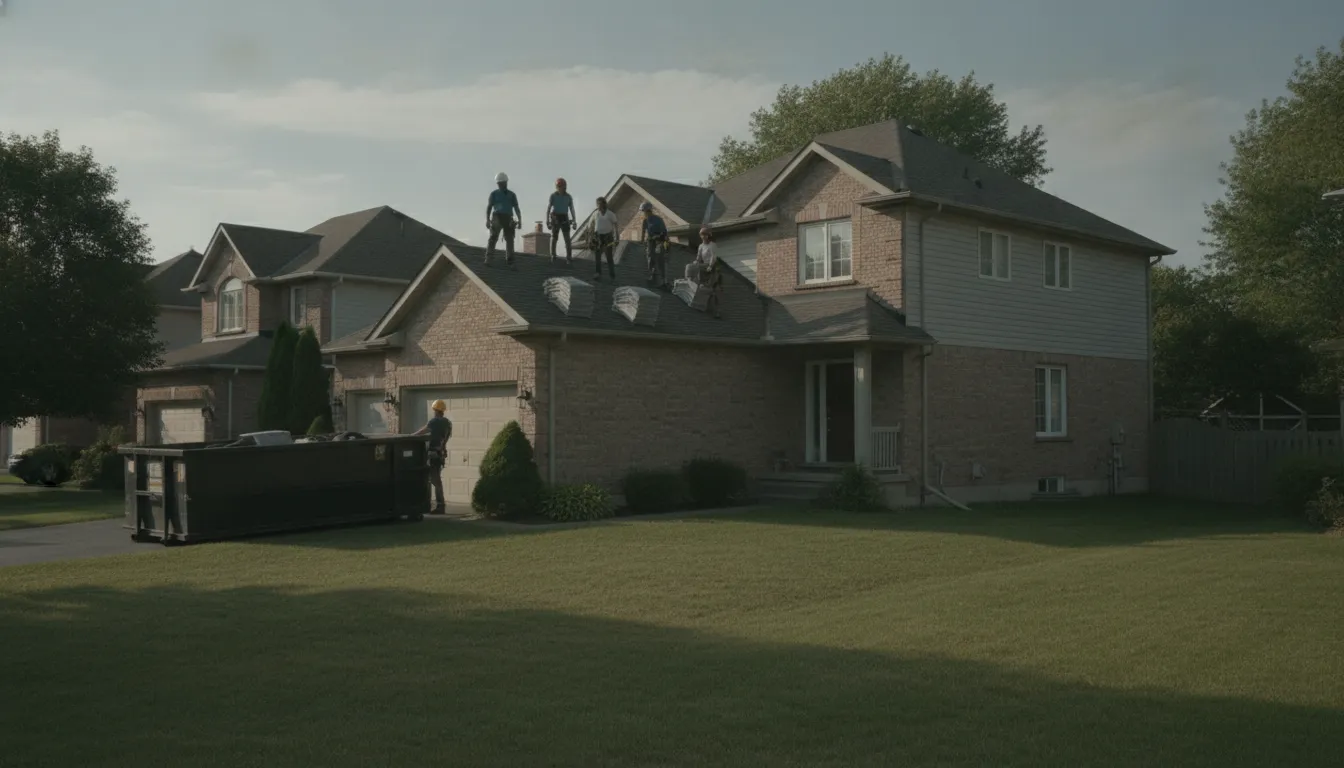
Request a documented flat roof assessment
Email us your property details to arrange an inspection and quote.
Email Us for a Free EstimateWeather is hard on your roof — email us for a same-day inspection.
Fall roofing conditions in Toronto, ON
Fall is the critical prep window around Toronto, ON: clear gutters, reseal flashing, and fix loose shingles before freeze-thaw and snow load arrive.
Proudly Serving Toronto, ON
Local, on-time service throughout Toronto and the surrounding area.